

Restore Comfort, Function, and
Confidence in Your Smile
Missing teeth can affect more than the way your smile looks. Even one missing tooth can change how you chew, speak, bite, and feel in everyday situations. Over time, nearby teeth may shift, your bite may become uneven, and the bone in the area may begin to shrink.
At Southern Laser Dentistry, we take a comprehensive approach to missing teeth. Instead of offering a one-size-fits-all solution, we evaluate your mouth, bone support, bite, gum health, and long-term goals to help determine the best replacement option for you.
You May Benefit From a Tooth Replacement Consultation If You…

You are missing one or more teeth
Whether you lost a tooth recently or have had a gap for years, replacing missing teeth can help restore function and protect your bite.

You Feel Self-Conscious When You Smile or Talk
Gaps in your smile can affect your confidence in photos, conversations, and everyday interactions.

Your Denture or Partial Feels Loose
Loose removable appliances can make eating and speaking frustrating. In some cases, implants or updated appliances may improve stability.

You avoid chewing on one side
Missing teeth can make chewing uncomfortable or uneven, causing extra pressure on the remaining teeth.

Your Teeth Have Started Shifting
When a tooth is missing, nearby teeth may gradually move into the empty space, which can affect your bite alignment.

You want a long-term tooth replacement option
Some patients want a solution that feels more secure, natural, and dependable for daily function.

Missing Teeth Can Affect Your Whole Mouth
A missing tooth does not only leave an empty space. It can create a chain reaction in your mouth over time. The longer a tooth is missing, the more likely the surrounding teeth, gums, bite, and jawbone may be affected.
Missing teeth may contribute to:
-
Difficulty chewing certain foods
-
Uneven pressure on remaining teeth
-
Teeth shifting into the open space
-
Changes in bite alignment
-
Increased wear on other teeth
-
Jaw discomfort or muscle strain
-
Bone loss in the area of the missing tooth
-
Loose or unstable dentures and partials
-
Lower confidence when smiling or speaking
Important note: Not every missing tooth needs the same solution. Some patients may be best suited for a dental implant, while others may benefit from a bridge, partial denture, full denture, or staged treatment plan.
We Look at the Full Picture Before
Recommending Treatment
Replacing missing teeth may help with:

We examine your teeth, gums, bite, and surrounding structures to understand your current oral health.
A Comprehensive Oral Exam

When needed, imaging helps us evaluate the area around the missing tooth and determine what replacement options may be appropriate.
Digital Imaging

We look at how your teeth come together and how missing teeth may be affecting your chewing pattern.
Bite and Function Review

For patients considering dental implants, bone support is an important part of determining whether an implant is possible or whether bone grafting may be needed.
Bone Support Evaluation

We explain your options clearly so you can make an informed decision based on function, appearance, budget, timeline, and long-term goals.
Personalized Treatment Planning
Tooth Replacement Options May Include
Dental Implants
Dental implants are designed to replace the root and crown of a missing tooth. They can provide a stable, long-term replacement option for patients with healthy bone support and good overall oral health.
Dental implants may be recommended if:
-
You are missing one tooth
-
You are missing multiple teeth
-
You want a fixed replacement option
-
You struggle with loose dentures or partials
-
You have enough bone support or are a candidate for bone grafting
Partial Dentures
Partial dentures are removable appliances used to replace several missing teeth while preserving the remaining natural teeth. They can help restore chewing function and improve appearance.
Partial dentures may be recommended if:
-
You are missing several teeth
-
You still have healthy, natural teeth remaining
-
You want a removable replacement option
-
You need a more affordable tooth replacement solution
Bone Grafting
Bone grafting may be recommended when there is not enough bone to support a dental implant. This treatment helps rebuild or preserve bone in areas where teeth have been lost.
Bone grafting may be recommended if:
-
You have been missing a tooth for a long time
-
You have been told you have bone loss
-
You recently had or need a tooth extraction
-
You are planning for a future dental implant
Fixed Dental Bridges
A fixed bridge may be used to replace one or more missing teeth by anchoring to neighboring teeth. This can be a good option when the surrounding teeth would benefit from crowns or when an implant is not the preferred choice.
Fixed bridges may be recommended if:
-
You are missing a tooth between two stable teeth
-
You want a non-removable option
-
You are not a candidate for an implant
-
The neighboring teeth need restorative support
Full Dentures
Full dentures may be used when all upper or lower teeth are missing or need to be replaced. Modern dentures can help restore appearance, speech, and basic chewing function.
Full dentures may be recommended if:
-
You are missing all teeth on the upper or lower arch
-
Remaining teeth cannot be saved
-
You need a complete smile replacement option
-
You want to restore facial support and function
PRF Therapy
PRF therapy uses a small sample of your own blood to create a concentrated healing material that may support tissue repair after certain dental procedures. It may be used with extractions, bone grafting, or implant-related treatment when appropriate.
PRF may be recommended if:
-
You are having an extraction
-
You are receiving bone grafting
-
You are planning implant treatment
-
Your dentist recommends additional healing support
Delaying Treatment Can Make Replacement More Complicated
Waiting does not always mean disaster, but it can make treatment harder later. That is the blunt truth.
When a tooth is missing, the jawbone in that area no longer receives the same stimulation from chewing. Over time, the bone may shrink. Neighboring teeth can also begin to shift into the open space, which can change your bite and create more complex dental problems.
Possible effects of waiting include:
-
More bone loss
-
More tooth movement
-
More bite imbalance
-
More wear on remaining teeth
-
Greater chance of needing additional treatment
-
Fewer replacement options later
-
Increased cost or complexity over time
If you have already waited years, do not assume it is too late. Many patients still have options. The first step is an evaluation.
What to Expect From Treatment
A simple, pressure-free first visit — designed around you.
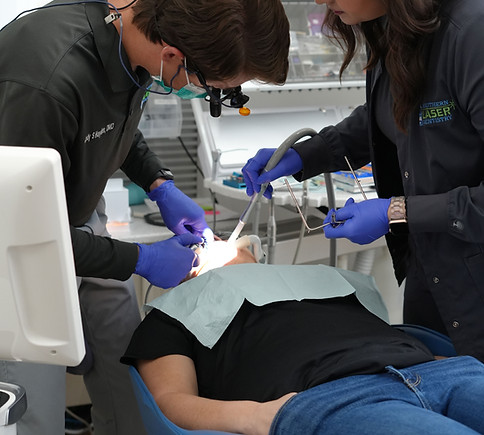
1
Evaluation & Digital Planning
We assess your alignment, bite, and goals using digital imaging and a comprehensive exam.
2
You’ll receive a clear plan outlining your options, timeline, and expected results.
3
Gradual, Guided Progress
Many patients tell us they wish they had come sooner.
Custom Treatment Plan
Treatment only begins when you feel comfortable.We go at your pace.
Restoring Missing Teeth Can Help Improve Daily Life
Replacing missing teeth may help with:
A stable replacement can help you eat more comfortably and distribute pressure more evenly.
Chewing Comfort
Closing gaps can help you feel more comfortable smiling, laughing, and talking.
Smile Confidence
Teeth help support the lips and cheeks. Replacing missing teeth may help maintain a fuller, more natural appearance.
Facial Support
Missing teeth can affect how certain sounds are formed. Replacing teeth may help improve speech confidence.
Speech Clarity
Replacing missing teeth may help prevent nearby teeth from shifting and protect your overall bite.
Bite Stability

The right replacement plan can help protect remaining teeth and reduce future complications.
Long-Term Oral Health
Missing Teeth FAQ
Still have questions? Our team is here to help you feel confident before your visit.
